Folsom, California is one of the Sacramento region’s most desirable places to live, and it is easy to understand why. It has strong schools, beautiful trails, lake access, historic charm, newer neighborhoods, major shopping, great restaurants, and a reputation for being one of the most complete communities in the area.
Folsom feels polished, but not boring. It has suburban convenience, but also real character. It has newer master-planned neighborhoods, but also a historic downtown. It has big-box errands and boutique shopping, family parks and serious cycling routes, lake days and date nights, tech campuses and Gold Rush history.
For homebuyers, Folsom often checks a lot of boxes at once: schools, safety, recreation, commute access, restaurants, shopping, and long-term resale appeal. For visitors, it offers one of the best day-trip combinations in the Sacramento region: Historic Folsom, Lake Natoma, Folsom Lake, Sutter Street, trails, breweries, museums, and outdoor adventure.
Folsom is not just a place people pass through on the way to Tahoe. It is a full lifestyle community with a strong identity of its own.
Where Is Folsom?
Folsom is located in eastern Sacramento County along Highway 50, just west of El Dorado Hills and east of Rancho Cordova. It sits at the edge of the Sacramento metro area, where the suburbs begin to meet the Sierra foothills.
That location gives Folsom a major lifestyle advantage. Residents can commute west toward Sacramento, Rancho Cordova, and the Highway 50 employment corridor, while also enjoying easy access east toward El Dorado Hills, Placerville, Apple Hill, and Lake Tahoe.
Folsom is close enough to Sacramento for work, sports, concerts, airport access, and state government business, but far enough east to feel more connected to lakes, trails, open space, and foothill recreation.
The Folsom Personality
Every great community has a personality, and Folsom’s is a blend of outdoor energy, family life, historic charm, and suburban practicality.
Historic Folsom gives the city its old-soul appeal. Sutter Street has restaurants, shops, bars, events, and historic buildings that make the area feel like a real destination rather than a generic shopping district.
Lake Natoma and Folsom Lake give the city its outdoor lifestyle. Residents kayak, paddleboard, bike, walk, run, row, fish, boat, picnic, and spend weekends near the water.
The schools and neighborhoods give Folsom its family appeal. Parents often compare Folsom with El Dorado Hills, Roseville, Rocklin, Granite Bay, and Davis when looking for strong school communities and long-term value.
The shopping and services give it convenience. Palladio, Broadstone, East Bidwell, and the city’s many commercial corridors mean residents can handle most errands without leaving town.
In other words, Folsom is a city that functions well. That may not sound glamorous, but anyone who has ever juggled school pickup, soccer practice, dinner, groceries, and a work commute knows it is practically a love language.
Folsom Real Estate
Folsom’s real estate market is strong because the city offers more than one kind of lifestyle. Buyers can choose from older homes near Historic Folsom, established neighborhoods with mature landscaping, larger homes in East Folsom, newer master-planned areas, condos, townhomes, luxury homes, gated pockets, and brand-new construction south of Highway 50.
The city’s housing appeal is tied closely to location and lifestyle. A home near the Historic District may attract buyers who want charm, walkability, restaurants, and light rail access. A home near Lake Natoma or American River Canyon may appeal to people who love trails, water, and scenery. A home in Empire Ranch may attract buyers looking for larger floor plans and a newer suburban feel. A home in Folsom Ranch may appeal to buyers who want new construction and planned future growth.
Folsom Real Estate attracts buyers who want:
- Strong public schools
- Access to trails, parks, and lakes
- A respected Sacramento-area address
- A mix of older charm and newer homes
- Shopping and restaurants nearby
- A practical commute along Highway 50
- Neighborhoods with long-term demand
- A city that feels established but still growing
Buyers should compare neighborhoods carefully. Folsom is not one uniform market. Commute routes, school boundaries, HOA rules, special assessments, lot sizes, trail access, and home age can vary significantly from one area to another.
For sellers, the best marketing does more than list bedrooms and square footage. It should tell the Folsom story: the neighborhood, nearby schools, trail access, lake proximity, commute routes, parks, restaurants, and lifestyle benefits.
Schools in Folsom
Schools are one of Folsom’s biggest draws. The city is served by Folsom Cordova Unified School District, which includes schools in both Folsom and Rancho Cordova. The district provides enrollment information and neighborhood school lookup resources for families, and Folsom High School posts annual new-student enrollment guidance for incoming students.
Folsom is home to well-known public schools including Folsom High School and Vista del Lago High School, along with a strong network of elementary and middle schools. Families also have access to nearby private, charter, and specialty education options.
For buyers, school boundaries should always be verified by exact address. This is especially important in a growing city where new neighborhoods and long-term planning can affect school assignments.
Families often compare Folsom schools with schools in El Dorado Hills, Roseville, Rocklin, Granite Bay, and Davis. The city remains a top contender for buyers who want a strong public school reputation paired with suburban amenities and outdoor recreation.
Restaurants in Folsom
Folsom has one of the best restaurant scenes in the Sacramento suburbs because it offers several different dining zones rather than one single strip.
Historic Folsom is the most atmospheric. Sutter Street and the surrounding blocks are ideal for date nights, casual dinners, cocktails, brunch, and post-event meals. The historic buildings and walkable streets make dinner feel more like an outing.
Palladio offers a more modern shopping and dining experience, with restaurants, entertainment, events, and a movie theater. It is especially convenient for families, groups, and anyone who wants dinner, shopping, and a movie in one stop.
East Bidwell and Broadstone are practical dining corridors, with casual restaurants, takeout, coffee, family meals, and everyday favorites.
Folsom restaurants cover a wide range: steak, sushi, pizza, Mexican food, Thai food, brunch, bakeries, seafood, burgers, wine bars, breweries, and casual cafes. Local favorites over the years have included Sutter Street Steakhouse, Chicago Fire, Samuel Horne’s Tavern, Karen’s Bakery, Back Bistro, Scott’s Seafood, Mas Taco Bar, and other neighborhood staples.
The best part is that Folsom dining works for real life. You can find a polished dinner, a family pizza night, a post-lake lunch, a coffee meeting, a brunch stop, or a quick takeout order without leaving town.
Shopping and Everyday Convenience
Folsom is one of the strongest shopping and services hubs in eastern Sacramento County.
Palladio at Broadstone is a major destination for dining, shopping, entertainment, fitness, movies, and events. East Bidwell Street has grocery stores, restaurants, pharmacies, gyms, medical offices, salons, banks, home improvement options, and everyday services.
Historic Folsom adds smaller shops, local businesses, boutiques, restaurants, bars, and specialty stops. That combination gives Folsom both big convenience and local charm.
Residents do not have to leave town for much. When they do, El Dorado Hills, Rancho Cordova, Roseville, and Sacramento are all within reach.
Parks, Trails, and Open Space
Folsom is a dream location for people who like to be outside. The City of Folsom highlights parks, trails, and 980 acres of open space, along with recreation programs and activities for residents.
The city’s trail network is one of its strongest lifestyle features. Residents walk, run, bike, commute, train, and explore on trails that connect neighborhoods, parks, lakes, and commercial areas.
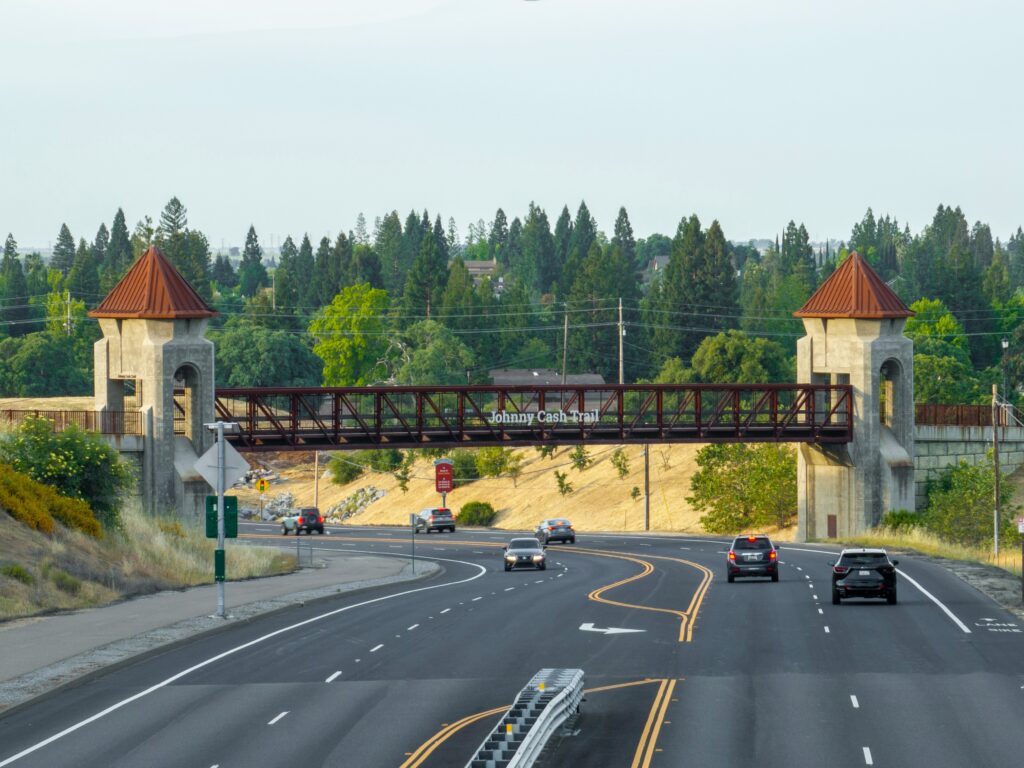
The Johnny Cash Trail is one of Folsom’s signature routes. It is a 2.75-mile Class I bike and pedestrian trail that connects toward the Historic District and the Folsom Lake Crossing Trail.
Folsom also connects to the American River Bike Trail, one of the Sacramento region’s most beloved recreation routes. For cyclists, runners, and walkers, this access is a major quality-of-life benefit.
Folsom Lake and Lake Natoma
Folsom’s outdoor lifestyle is anchored by two major water recreation areas: Folsom Lake and Lake Natoma. California State Parks notes that Folsom Lake State Recreation Area includes both Folsom Lake and Lake Natoma, with many access points and entrances.
Folsom Lake is the bigger, more open recreation destination. Residents use it for boating, fishing, swimming, hiking, biking, picnicking, paddleboarding, and summer lake days.
Lake Natoma has a calmer personality. It is popular for kayaking, rowing, paddleboarding, walking, biking, and scenic outings. Its quieter water and beautiful setting make it one of Folsom’s most treasured local amenities.
Together, the two lakes give Folsom an outdoor advantage that few Sacramento-area communities can match.
Arts, History, and Entertainment
Folsom has more history and culture than many suburbs. Historic Folsom, the Folsom History Museum, the Folsom Powerhouse, the Folsom Prison Museum, and the Johnny Cash connection all give the city a story beyond new homes and shopping centers.
Folsom Powerhouse is one of the city’s most important historic landmarks. Lake Natoma Inn’s local attraction guide notes that the Historic Folsom Powerhouse was hailed in 1898 as “the greatest operative electrical plant on the American continent” and remains a unique 19th-century powerhouse open to the public.
Harris Center for the Arts at Folsom Lake College adds concerts, theater, dance, speakers, comedy, and cultural programming. This gives residents access to performing arts without driving into downtown Sacramento.
Historic Folsom also hosts community events, markets, concerts, holiday activities, and seasonal celebrations. It is one of the reasons Folsom feels like a real community rather than just a collection of neighborhoods.
Commuting and Transportation
Folsom’s main commuter route is Highway 50, which connects the city to Rancho Cordova, Sacramento, El Dorado Hills, Placerville, and the broader region. The city also has light rail access, especially useful for residents near Historic Folsom, Natoma Station, and other western areas.
Commute times vary depending on where you live. Homes closer to Highway 50 may be more convenient for commuters. Homes farther into East Folsom or Folsom Ranch may offer newer neighborhoods or more space, but can require extra local driving.
For many residents, Folsom works best when daily life is centered along the Highway 50 corridor, Folsom, El Dorado Hills, Rancho Cordova, or remote work. Commuting to downtown Sacramento is possible, but buyers should test the drive during real commute hours before choosing a neighborhood.
Weather and Lifestyle
Folsom has hot, dry summers and cool, wetter winters. Summer heat is real, but the city’s lakes, pools, trails, shaded parks, and evening restaurant patios help soften the edges.
The lifestyle is active, family-oriented, and convenience-driven. People move to Folsom for the schools, parks, trails, homes, restaurants, shopping, and overall sense that the city is well put together.
It is not the cheapest place to live in the Sacramento region, and it is not the quietest. But Folsom offers a strong mix of amenities, reputation, and daily livability.
Things to Do in Folsom
Folsom has more to do than many suburbs, especially for people who enjoy history, dining, trails, and water recreation.
Popular things to do in Folsom include:
Explore Historic Folsom and Sutter Street
Walk, bike, or run the Johnny Cash Trail
Spend the day at Lake Natoma
Boat, swim, or picnic at Folsom Lake
Shop and dine at Palladio
Visit Folsom Powerhouse State Historic Park
See a show at Harris Center for the Arts
Visit the Folsom History Museum
Check out the Folsom Prison Museum
Bike the American River trail system
Try local restaurants, breweries, bakeries, and cafes
Attend concerts, markets, and seasonal events in Historic Folsom
Folsom is also close to El Dorado Hills, Granite Bay, Apple Hill, Placerville, Sacramento, and Lake Tahoe, which makes it an excellent home base for regional adventures.
Pros and Cons of Living in Folsom
Folsom has a lot of strengths, but it is not the right fit for everyone.
Pros
Folsom offers strong schools, excellent recreation, lake access, a strong trail system, shopping, restaurants, historic charm, and a wide variety of housing. It has a strong reputation and remains one of the Sacramento region’s most sought-after communities.
It is especially appealing for families, professionals, remote workers, cyclists, outdoor enthusiasts, and buyers who want long-term value in a well-established city.
Cons
Folsom can be expensive compared with many Sacramento-area communities. Traffic can be challenging near Highway 50, East Bidwell, school routes, and major shopping areas. Some newer neighborhoods may have HOA fees, Mello-Roos or special assessments, and ongoing construction nearby.
Buyers should verify school boundaries, commute routes, assessments, HOA rules, trail access, and future development plans before choosing a home.
Is Folsom a Good Place to Live?
Folsom is one of the best places to live in the Sacramento region for people who want strong schools, outdoor recreation, shopping, restaurants, trails, and a high-quality suburban lifestyle with genuine local character.
It works especially well for families who want schools and youth activities, professionals who want access to the Highway 50 corridor, outdoor lovers who want trails and lakes nearby, and buyers who want a community with a strong reputation.
The best way to understand Folsom is to spend a day exploring its different sides. Start in Historic Folsom, walk along Sutter Street, visit Lake Natoma, drive through American River Canyon, Empire Ranch, Broadstone, Natoma Station, Briggs Ranch, and Folsom Ranch, then end the day with dinner at Palladio or in the Historic District.
Folsom is historic and modern, scenic and practical, active and family-friendly. It has enough polish to feel comfortable and enough character to feel memorable. For many buyers, that is exactly the sweet spot.